CREATING BEHAVIOUR CHANGE
Creating sustainable washing practices.
How can we get people to shift automatic behaviours long term to more sustainable ones?
6 week team project for Canonical.
What's the problem?
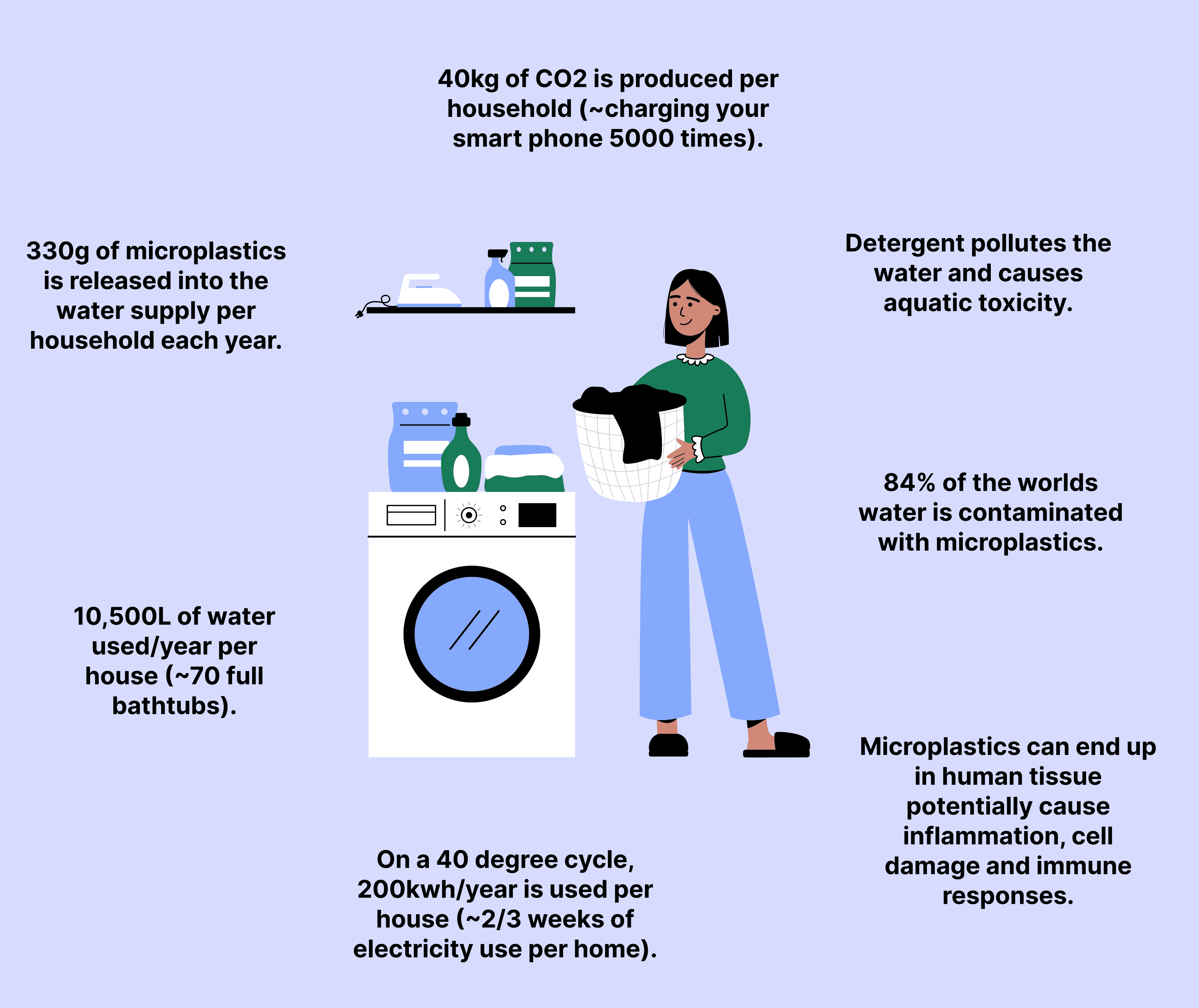
Most people wash clothes using a machine on cycles because it's what they're used to - but in the UK, washing machines contribute 2.26 million tonnes of CO2 annually. Simple measures such as reducing washing temperature can reduce this significantly - but how do we ensure people change those habits long term?
Who are the users?
Focusing on a small subsect of user - I focused on international master's students who are new to the UK.
Why should we care?
"Washing and drying a load every two days creates around 440kg of CO2 each year, which is equivalent to flying from London to Glasgow and back with 15-mile taxi rides to and from the airports." - The Guardian.
We all need to do more to reduce our Carbon footprint to help slow down climate change and live more sustainably.
What's my approach to this problem?
Behaviour change theories are key to creating long term, sustainable new behaviours. To implement this, it was key to first understand the target users and their core concerns and needs.
What were the main insights?
Without knowing anything about washing detergents, people choose randomly based on packaging, weight and price.
Some students hand wash certain items as they've been taught to do so.
Some wash things after single use that others would wash after multiple wears.
Drying temperature is always the highest as it is assumed clothes will dry faster - time is a key factor (provided cost is all the same).
Assumptions are that more expensive washing cycles may clean better.
Not being familiar with machines and settings means users choose highest temperature as a default - assuming cleaning will be superior.
Key takeaways
People from different cultures have different approaches to cleanliness and hygiene, and what standards of hygiene are kept.
People often pick up habits from their parents/upbringing and don't really question them.
For students cost, weight (carrying items) and efficiency were the key concerns.
Sustainability was low on factors considered unless it maintained the quality of materials (i.e. softer washing detergent) or was less harmful for the wearer (less toxic detergents).
Personal needs, health, efficiency, cost, time>>> environmental concerns, energy saving.
What behaviour change theories were used?
**hover over to see details
Com-b model (to understand barriers towards ideal behaviour).
Fogg's behavioural model (to understand the ability, motivation and trigger needed to reach target behaviour).
Behaviour change strategies (choosing between more forceful or passive methods - feedback/gamification/behaviour steering/persuasive technology).
The final concepts and reasoning behind them.
An outdoor installation + a mobile app.
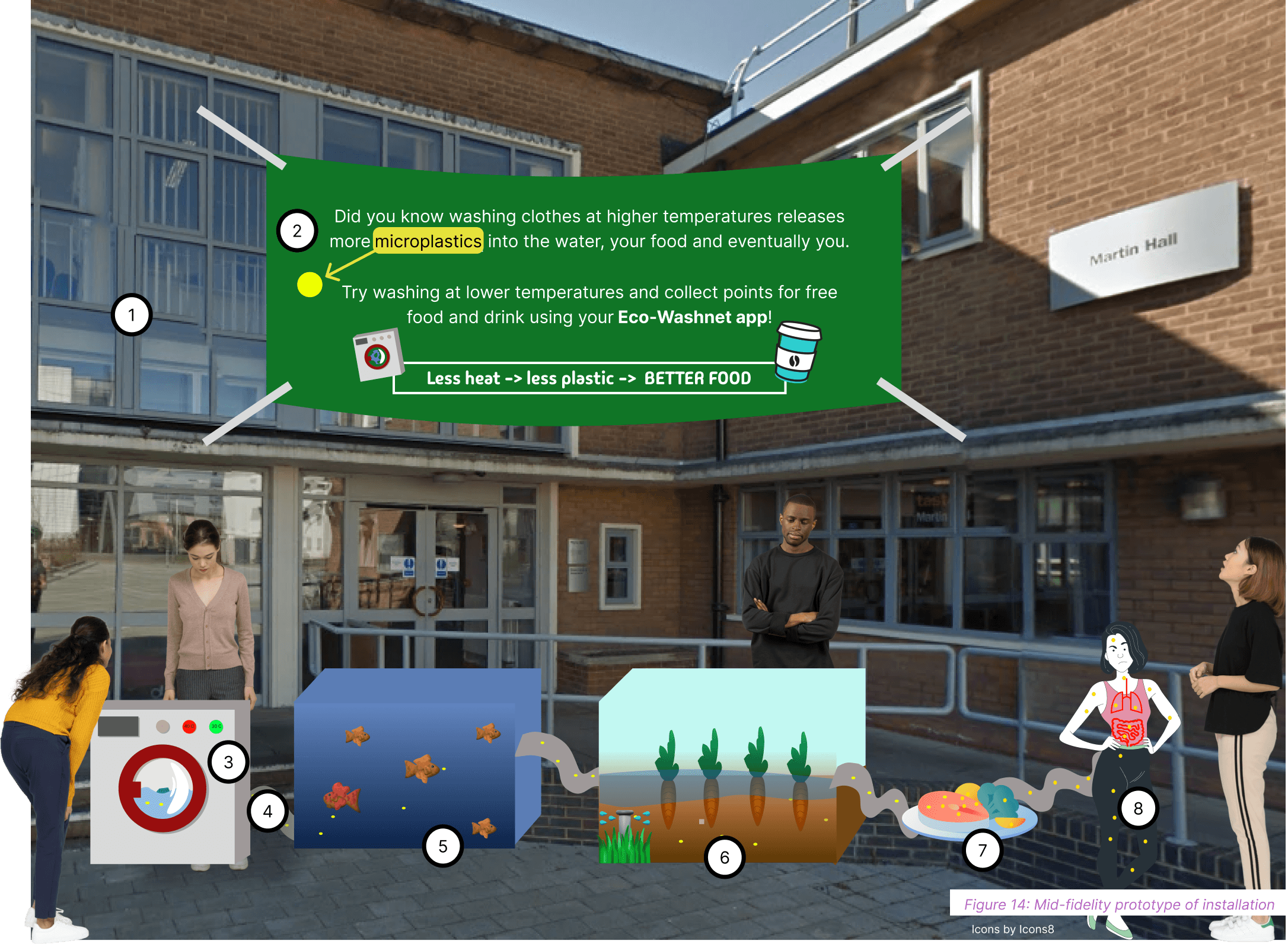
1) A physical installation on campus that students can interact with which educates them about how higher temperatures from washing release more microplastics, which will get into food, water and soil.
Reason #1:
Targeting the user’s core values is likely to be a more successful way to create more sustainable behaviours long term (Marcus and Roy, 2019).
The user’s core values were centred around their personal needs especially in regards
to their health. Creating an installation to connect microplastics to their health will shift this as a higher priority issue.
Reason #2
Societal norms are a huge influence on a user behaviour especially in an enclosed environment such as a university (Rinker and Neighbors, 2014).
An outdoor installation will help create new societal norms amongst the students and be a gentle influence.
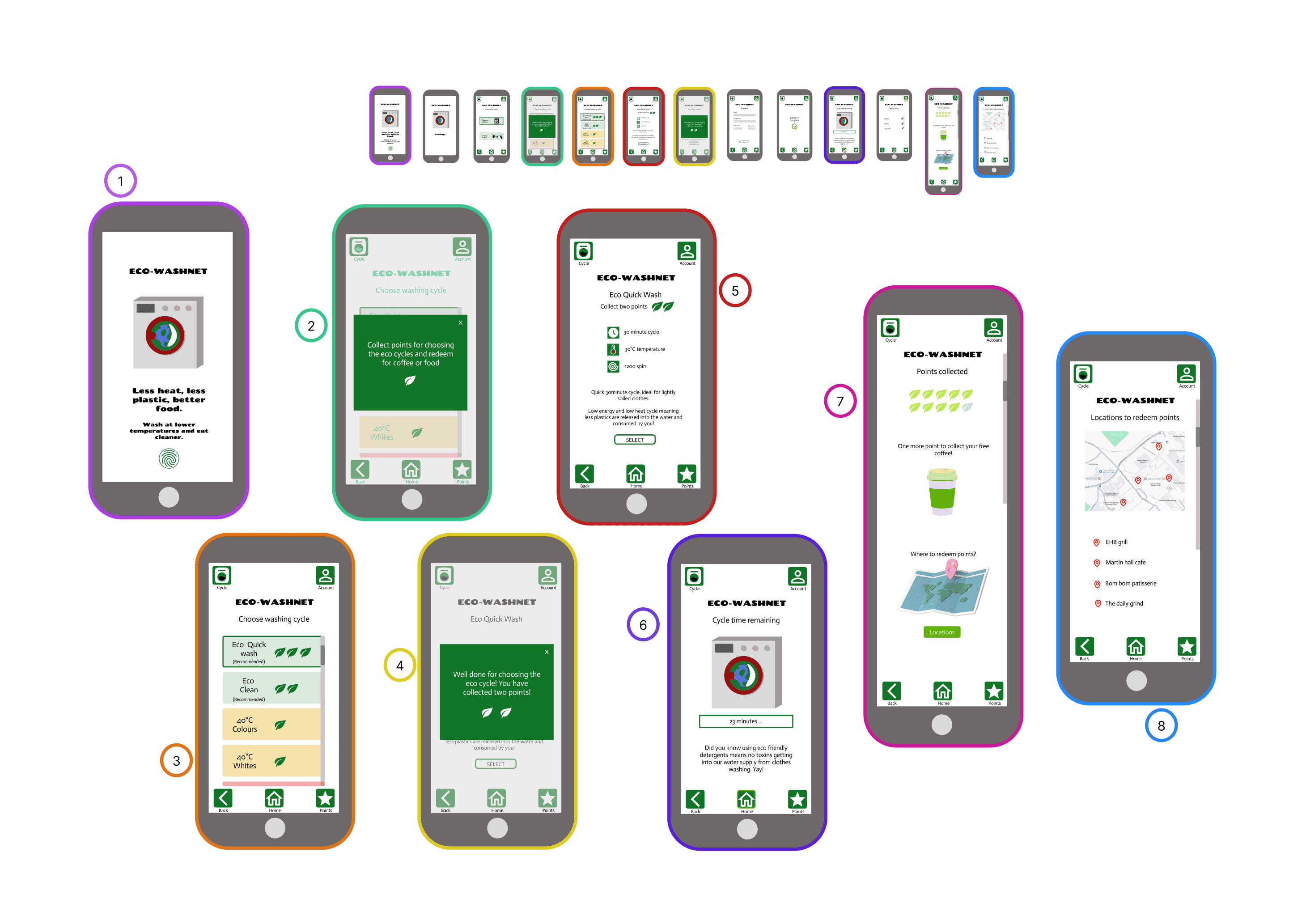
2) A mobile app where students will book washing machine slots for use. It will have lower temperatures as default settings, include positive feedback for sustainable choices and reward users with points (gamification) that can be exchanged for food/drinks.
Reason #1
Feedback combined with behaviour steering (default settings) will ensure gentle nudges towards ideal behaviours.
Positive feedback for correct choices help to reiterate ideal behaviour.
Reason #2
Gamification has been shown to result in positive sustainable, long term behaviour
change in comparison to just educating users (Douglas and Brauer, 2021).
Rewards students with points for choosing low temperature cycles and rewarding them with free food/drink gives them stronger motivation.
Did they work?
It's hard to assess long term behaviour change in a short time frame. Longer term usability testing and feedback is needed for a more thorough assessment of success.
However, based on usability testing conducted:
- Users learned new information through app + installation.
- Linking washing temperatures to health made them feel concerned/provided strong motivation for change.
- Gamification was a good motivator to get them to use lower temperatures.
-The app was efficient, effective and enjoyable to use.
mirunaalini.alagarajah@gmail.com
Back to top
Next project