EXTERNSHIP: Institute of Mental health Singapore
Analysing and redesigning mental health care coordination using operational analysis and process mapping.
6 weeks
What's the problem?
Mental health issues are on the rise and Mental health intitutes are the first responders who need to reach people before issues escalate. However, it's a complex system with so many factors to consider. So how can we evaluate and streamline this system to provide better care for patients and strengthen risk assessments?
Who are the users?
xxx
Why should we care?
xxx
How did i fix it?
xxx
Where's the proof the solution worked?
xxx
The brief.
xxx
Exploring the paradigm.
xxxx
xxx
Desktop walkthrough.
Rapid, simple prototyping at very early stages identified the viability of our concept and generated many unanswered questions for us to explore.
Customer journey mapping.
Identifying the stages that the user may go through based on our initial concept ideation.
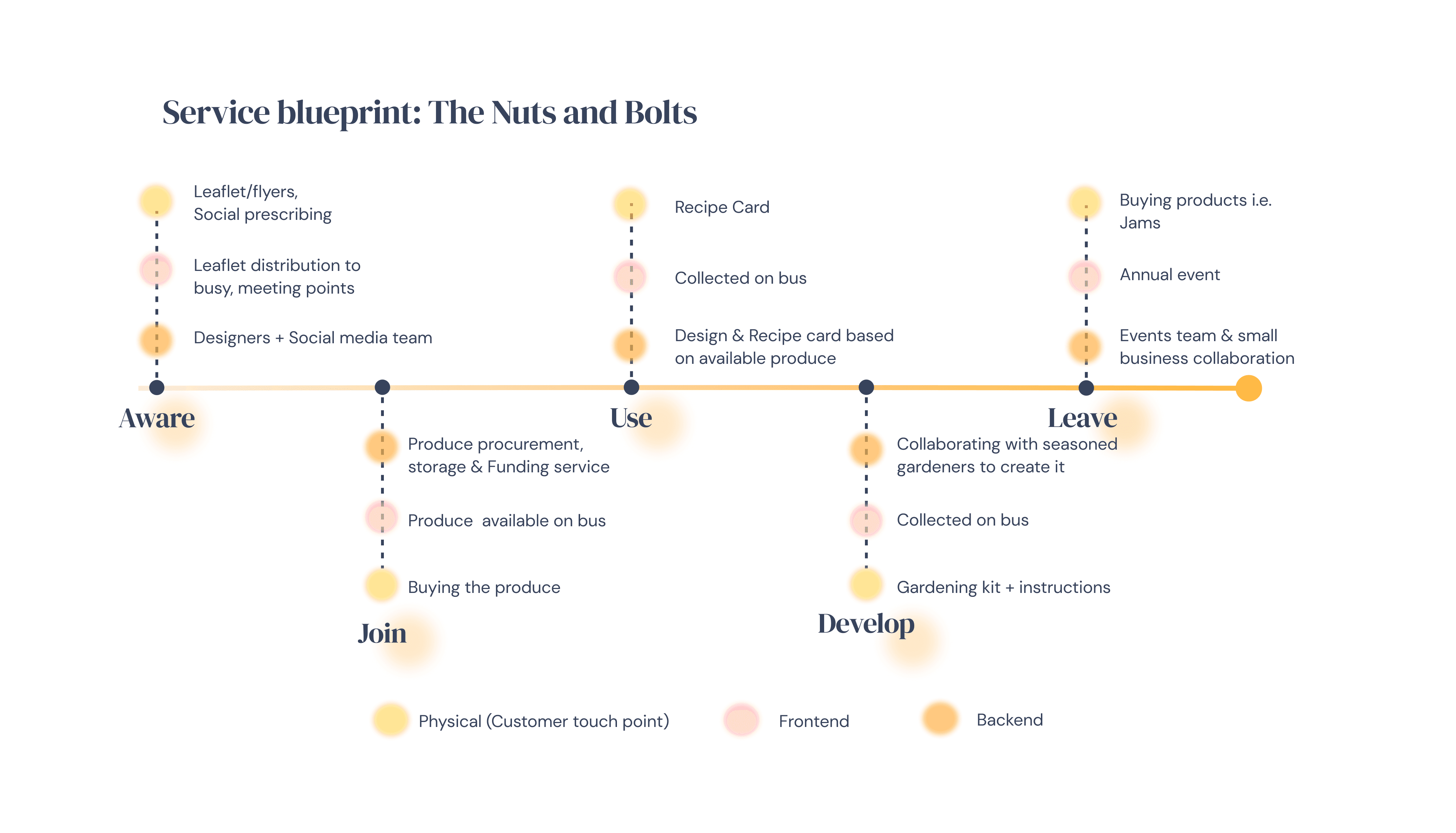
Service blueprint.
Creating the service blueprint helped us to understand where the users, providers and our service interact together and allowed us to determine the front and backstage processes that were essential to our service.
Refining the concept.
Giga mapping and ZIP analysis.
We used Giga mapping in order to take a step back and look at how our service could fit into the ecosystem of Charnwood and what services we could collaborate with or have impact on.
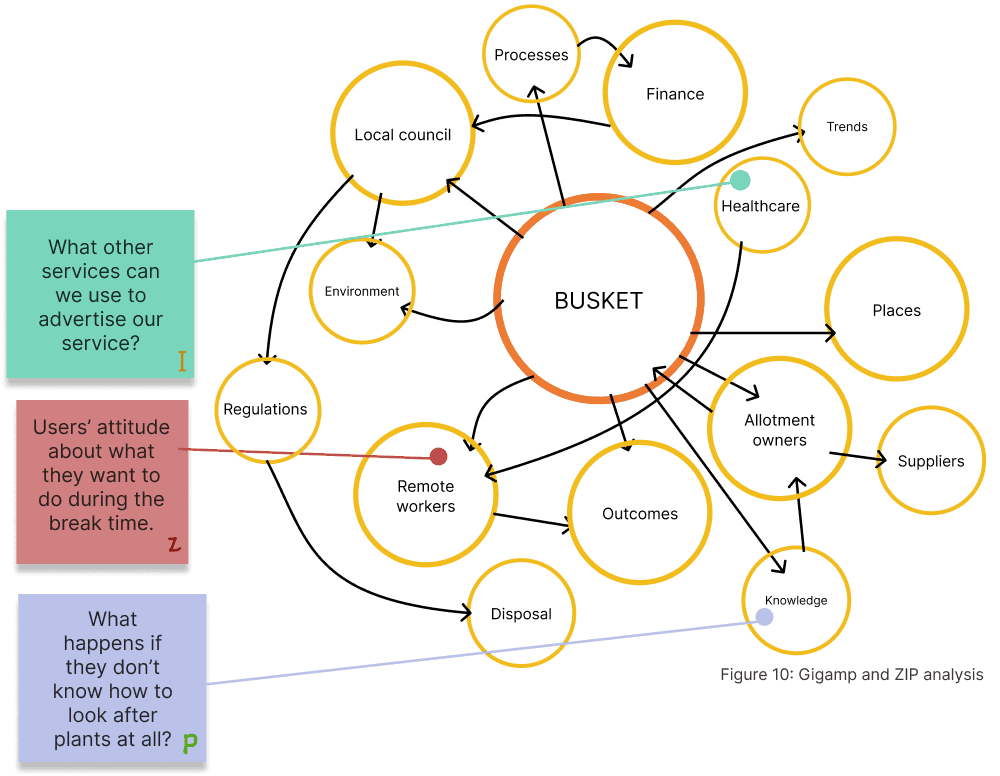
ZOOMING OUT: GIGA MAPPING
AND ZIP ANALYSIS
5W and 1H.
Based on the questions we now had, we generated as many hypotheses as we could. As a team, we decided on the key three hypotheses that we needed to validate in order to get our service running and create our MVP (minimum viable product). We used 5W and 1H method to help us plan how we were going to test these hypotheses and with whom.
Prototype testing.
We tested our visual storyboard with our key user group (remote workers) and key stakeholders (Leicestershire county council and market stall owners) to refine our concept and possible avenues of collaboration.
Social business model canvas.
We used the Good services scale to help us identify where our service was and where we wanted to improve things.
This business model helped to consider costs, partnerships and key activities we required.
mirunaalini.alagarajah@gmail.com
Back to top
Next project